Largo, FL · Garage Door Service
Belleair Beach homes run about two years older than Largo's typical build year, and salt air off the Intracoastal ages hardware faster. Maintenance here follows a different schedule.
Largo's housing stock runs 1958 to 2001 with a median build year of 1978. Belleair Beach sits at 1976, close enough that you'd think the doors are the same job - they're not, and the reason is location, not age. This is a barrier island, five miles from Largo, with water on both sides. Salt-laden air moves through here constantly, even on days that feel calm and mild. That air gets into hinge pins, roller bearings, and the galvanized coating on torsion springs faster than it does a few miles inland. A door built in 1976 in Largo proper and a door built the same year on this strip of coast are not aging at the same rate. The steel corrodes from the inside of the coil out, so a spring can look fine and still be down to half its rated cycles. Median household income here runs well above the wider service area - $137,045 against $93,862 - which usually means owners replace openers and hardware on a shorter cycle than the housing age alone would suggest, but the original torsion assemblies and track hardware from the 1970s often get left alone until something breaks. That's the failure pattern specific to this address, not a general maintenance pitch.
On a barrier island door, corrosion shows before mechanical wear does. Look for rust bleeding through the spring coil paint, especially near the winding cone - that's usually the first visible sign, months before the spring lets go. Rollers on steel stems seize up and start grinding instead of turning; you'll hear a scrape on the way up that wasn't there a year ago. Track brackets that were galvanized in 1976 lose their coating faster this close to the water, and once bare metal shows, pitting speeds up. Openers show it differently - circuit boards and sensor eyes don't corrode outright, but the photo-eye brackets at the bottom of the track do, and a bracket that's shifted a sixteenth of an inch from rust creep will throw false safety-reversal errors. None of this is dramatic. It's slow, and it's why a door here can feel fine right up until a cable parts or a spring snaps under load.
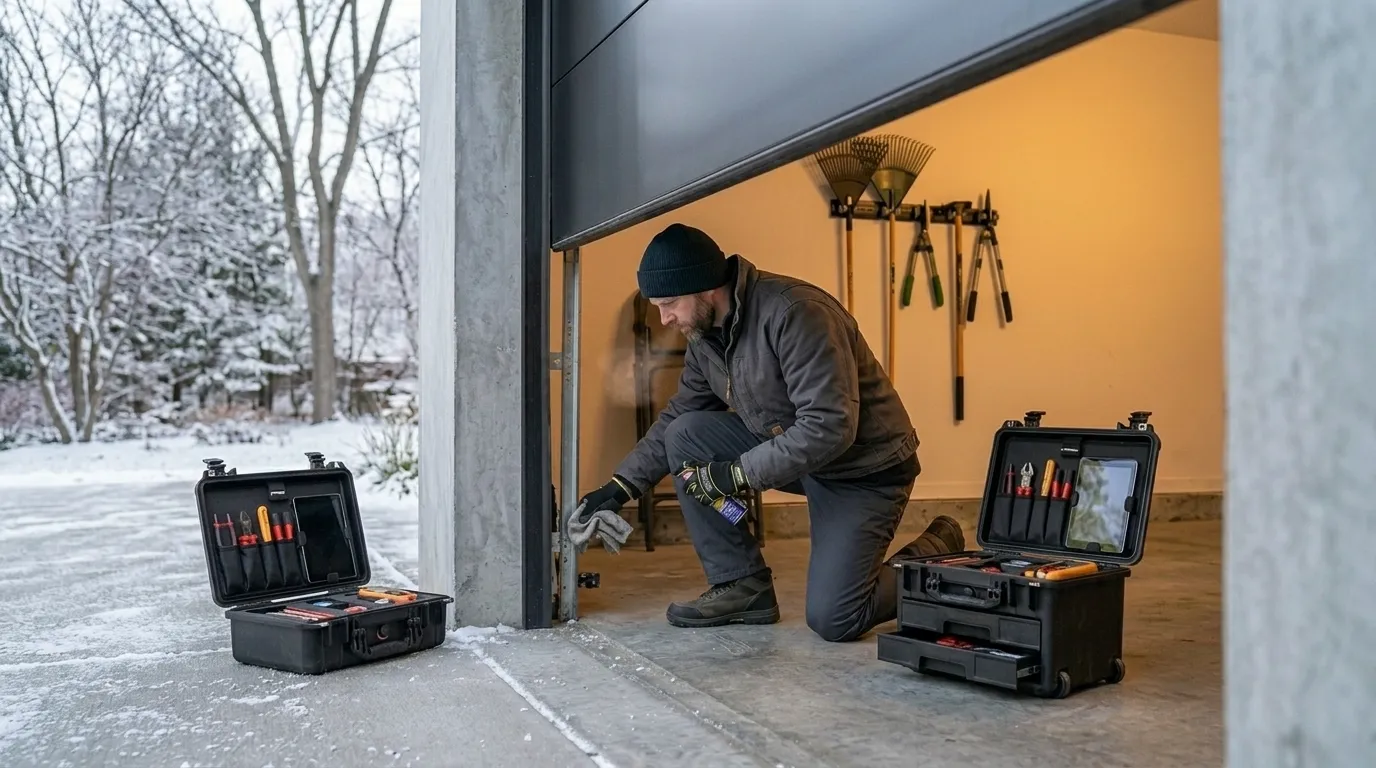
You can do some of this yourself and it's worth doing. Wipe down the tracks and spring coils every few months with a dry cloth - not water, which just adds to the problem - and a light coat of garage-door-specific lubricant on rollers and hinges. Check the bottom weatherstrip for cracking; UV and salt air both break down rubber faster here than inland. Test the auto-reverse function by placing a roll of paper towels under the door and watching it kick back on contact. What you shouldn't do yourself: touch the torsion spring itself. A wound spring under tension can put you in the hospital, and on a door this age the winding cones themselves may be original and more brittle than they look. That's not a scare tactic, it's just where the line sits.
Because this is a job we drive to from Largo, five miles out, we carry stock that fits a coastal 1970s door rather than a generic assortment. That means galvanized and zinc-coated torsion springs rated for the coil sizes common in this build era, sealed ball-bearing rollers instead of open steel ones, and stainless hardware for track brackets where the original zinc has already started to go. We also carry weatherstrip in standard door widths, since the older doors on this stretch tend to run a size that's fallen out of common production. We don't stock every opener logic board on the market - if a control board on an older unit has failed outright, that part sometimes has to be ordered, and we'll tell you that up front rather than promise a same-visit fix we can't back.
The main complication on this side of the barrier island is that corrosion hides. A spring or bracket can look serviceable from a step-ladder inspection and still be near failure underneath a thin layer of surface rust, so a maintenance visit here leans more on load-testing and cable tension checks than a visual pass would in a drier inland neighborhood. The other complication is access - narrow lots and shared driveways common on this stretch mean truck positioning takes longer than it would on a wider inland street, which is worth knowing before you book a same-day slot. We're honest that this is a service call from Largo, not a local branch, so there's no walk-in counter here - every visit is scheduled.
More often than an inland home of the same age. Salt air accelerates corrosion on springs, rollers, and track hardware, so we'd look at a yearly check here rather than the two-year interval that's reasonable further inland in the service area.
It depends on what we find on inspection. If the spring coil and track hardware show only surface rust, maintenance can extend the life of the door for years. If the coating has already failed and pitting has started, replacement usually costs less over time than repeated repairs.
No. We're based in Largo, about five miles away, and every visit here is a scheduled drive out, not a walk-in call from a local depot.
No - lubricant on a torsion spring under tension doesn't stop corrosion and can make the coil slip while winding. Wipe it dry and leave the spring itself to a scheduled visit.
Call now or request a free quote - same-day service on most repairs, upfront written pricing.
