Largo, FL · Garage Door Service
Openers in Belleair Beach's 1970s-era homes wear out on the logic board, not the motor. We come from Largo, five miles out, to fix what's actually failing.
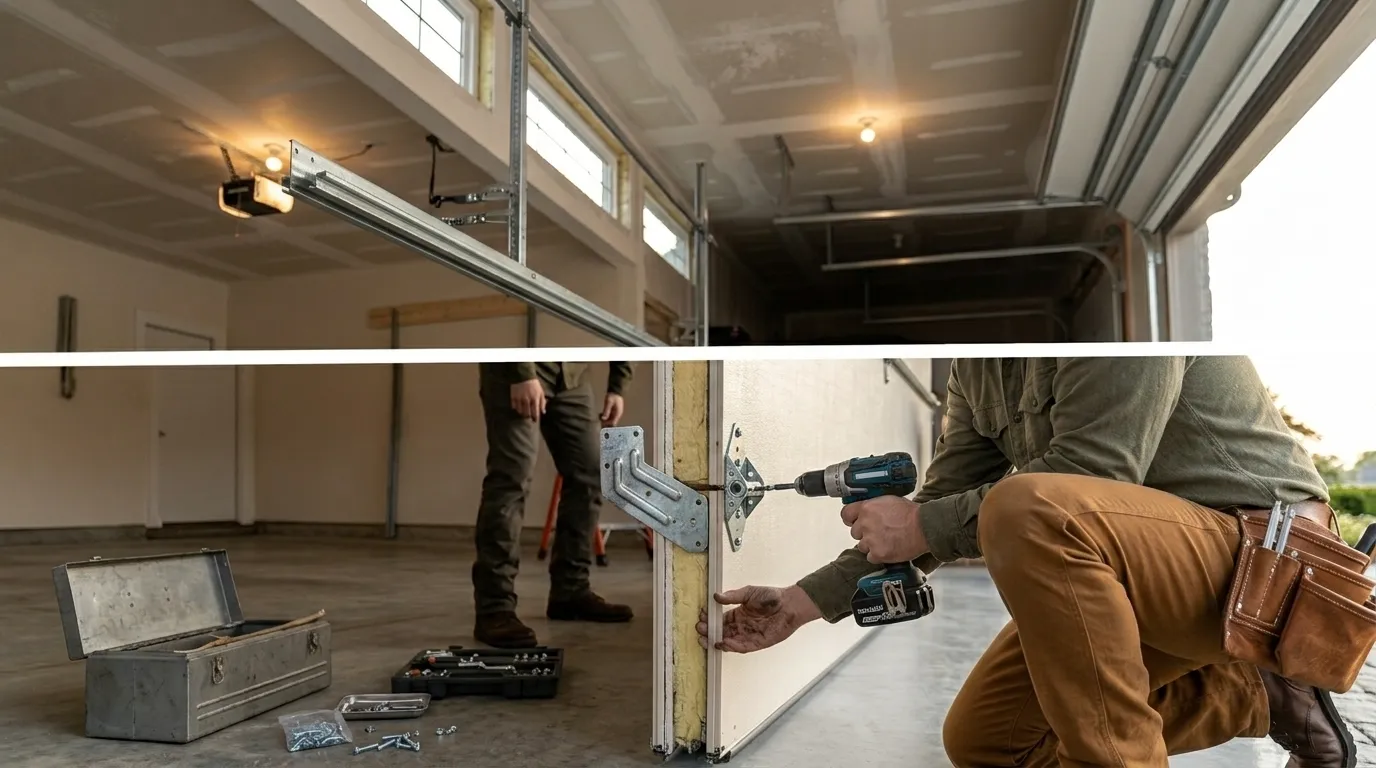
The opener almost never dies the way people expect. It's not the motor burning out - it's the logic board, the part that reads the remote signal and tells the motor when to stop. On this stretch of the beach, that board has usually been swapped once already, sometimes twice, because the house it's bolted to is old enough that the board itself is a second- or third-generation replacement.
Most houses in Belleair Beach went up around 1976, which puts them right in the middle of the 1958-2001 range that covers this part of Pinellas County. A garage built in the mid-70s was framed for a standard-lift chain or belt opener with a headroom clearance that newer openers don't always like. When a homeowner here calls about a door that won't respond to the remote but hums when you push the wall button, nine times out of ten it's that board, not the motor and not the springs.
The mild coastal climate in this area doesn't put the same stress on hardware that freeze-thaw regions see, but it does mean humidity sits in that garage year-round. Circuit boards and capacitors don't love damp air any more than they love age, and a 40-year-old garage with no real ventilation gives both problems a place to work on the same part at once.
The opener runs - you hear the motor, sometimes you see the chain or belt twitch - but the door doesn't move, or moves an inch and stops. That's a stripped gear inside the unit, common once an opener passes the fifteen-year mark, which a lot of units in houses built in the mid-70s already have.
Another pattern: the remote works from the driveway but not from the street, or it used to reach the car and now it doesn't. That's usually a weak capacitor on the board losing its charge, not a dead remote battery, though check the battery first because it's free to rule out.
A third one: the light blinks, the door reverses partway up or down every time, and nothing you do changes it. That's the logic board misreading the safety sensors, and it's worth ruling out the sensors themselves - a spider web or a smear on the lens can trigger the exact same fault. If the board is original to a house built in the 70s or 80s, though, the sensors are rarely the actual cause; they're just where the symptom shows up first.
Start with the sensors - the two small eyes low on each track. Wipe both lenses with a dry cloth and make sure nothing's blocking the beam between them. If the door reverses or refuses to close, this is the first thing to check and it takes two minutes.
Next, the remote. Swap the battery before you assume the unit is failing - it's the cheapest possible fix and gets ruled out constantly by people who go straight to calling someone. If a hard-wired wall button still works but the remote doesn't, that narrows the fault toward the remote or the receiver, not the whole opener.
Check the breaker. An opener that's completely dead, no light, no hum, is sometimes just tripped power, especially after a storm knocks it out briefly.
What you shouldn't touch: the opener's internal gear housing, or anything involving the torsion spring above the door. Those aren't opener problems even when they look like one, and a spring under tension can do real damage if you're not set up for it. If you've checked the sensors, the battery, and the breaker and the door still won't behave, that's the point to stop and call it in.
For opener calls, the truck carries standard replacement logic boards, capacitors, and receiver units that fit most chain and belt-drive openers common in homes from this era, along with new remotes and keypads to match. Most board and capacitor failures get fixed on the first visit.
What doesn't always come off the shelf is a full replacement unit matched to an unusual mounting bracket or a discontinued housing - some openers from the 70s and 80s used mounting hardware that current manufacturers don't make anymore. When that happens, the honest answer is a full opener swap rather than a patch job, and that sometimes means a short wait on the new unit rather than a same-visit fix.
We don't stock every legacy part for every opener ever installed in a garage this age. If your unit turns out to be one of the odd ones, we'll tell you straight rather than force a part that won't hold.
We run this call from Largo, about five miles out, so there's no separate branch sitting in Belleair Beach - just the same truck and the same stock making the short trip down. That distance isn't a factor in most repairs, but it matters for timing on parts: if your opener needs something ordered, it adds a day, not a week, because Largo isn't far.
Belleair Beach is a small footprint - around 666 households on this stretch - so opener calls here aren't the volume business that a bigger inland suburb generates. That's not a complaint, it just means less chance the exact make and model sitting in your garage is one we've seen five times this month.
One more thing worth saying plainly: at a median household income of $137,045 in this area, a lot of homeowners default to full replacement over repair once an opener passes a certain age, and that's often the right call. A board fix on a fifteen-year-old unit buys you a few more years. A new opener buys you a warranty and modern safety sensors. We'll tell you which one makes sense for your unit rather than push the bigger job by default.
That points to the receiver or the remote itself rather than the motor. Check the remote's battery first, then the antenna on the opener unit if you have access to it. If the wall button and a fresh-battery remote both fail to open the door, the problem has moved to the logic board, which is a common failure point on openers that have been in a garage for a decade or more.
There's no fixed number, but once an opener is pushing fifteen to twenty years and needs a second board or capacitor replacement, a new unit usually costs close to the repair and comes with a fresh warranty and current safety sensors. We'll look at the specific unit and tell you honestly which side of that line it's on.
Humid air sitting in an unventilated garage doesn't help capacitors or circuit boards last, and it adds to whatever wear the unit already has from age. It's one factor among several, not the whole story - an opener's age and how much it's been used matter just as much.
Call now or request a free quote - same-day service on most repairs, upfront written pricing.
