Largo, FL · Garage Door Service
Belleair homes run a few years newer than the Largo average, with different spring counts and opener gear. Maintenance done from Largo, tuned to this stock.
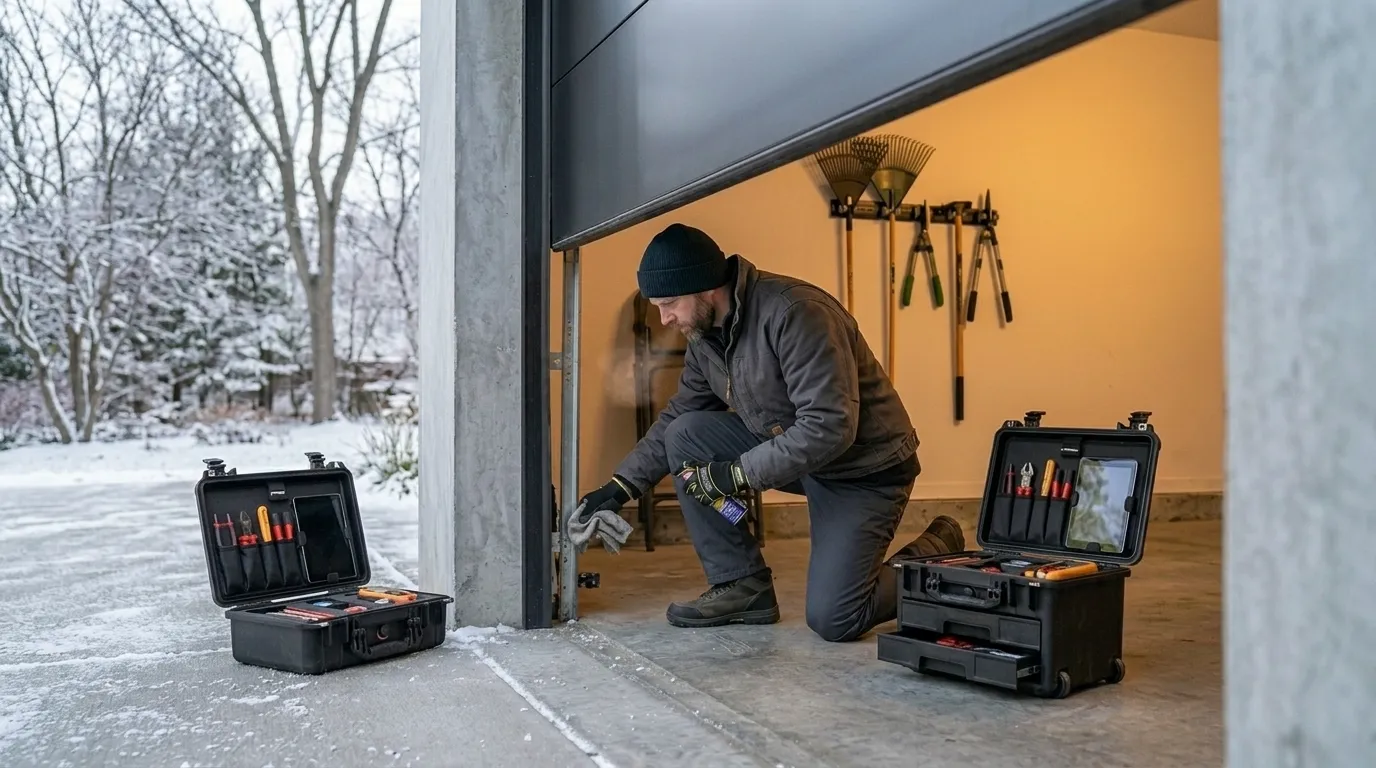
Belleair's median home dates to about 1975, a few years ahead of the 1978 median across the wider Largo service area. That gap matters more than it sounds like it should. A door and opener from the mid-1970s is usually on its second or third opener already, but the track and spring hardware underneath is often original - heavier gauge steel than what got installed in the later-1970s and 1980s builds that make up more of the rest of the area. You can do some of this yourself: wipe the tracks, check the rubber weather seal at the bottom panel, look at the cable ends for fraying. What you shouldn't touch is the torsion spring itself, or any adjustment to the down-force screw on an opener from that era - the tension in a 1970s spring is not gentle, and the failure mode is not a scrape, it's a hospital visit. Lubricate hinges and rollers with a garage-door-specific grease, not household oil, which attracts grit and gums up faster in Florida humidity. Beyond that, an annual once-over by someone who knows what a spring at the end of its life sounds like is worth more than a stack of YouTube tutorials.
A standard maintenance visit on a Belleair double door - track alignment, spring check, hardware torque, opener sensor test - runs on the shorter end of what we see across the service area, because the housing here is a tighter band of ages than the 25 named areas we cover overall. Less variation in door age means less time spent figuring out what decade of hardware we're looking at before we can start the actual work. We're coming from Largo, about 4 miles out, so travel isn't the variable - the door itself is. A door that's had regular service stays a 45-minute job. One that hasn't seen a wrench in years, even a newer one, can run long once we find a seized roller or a cable that's been quietly stretching.
We don't publish a flat maintenance rate here because door count, spring size, and opener type change the number, and we're not going to guess at your setup in writing. What we can say: Belleair's median household income sits at $117,500, well above the wider service area's $93,862, and homeowners here more often choose to catch a worn part on a maintenance visit rather than wait for it to fail on a Saturday morning. That's not a sales pitch - it's just what the visit logs show. A tune-up costs less than an emergency spring replacement, and a lot less than a new door. If your opener's warranty has lapsed and the motor's the problem, replacement usually makes more financial sense than a repeated repair call, and we'll tell you that straight rather than keep billing for patches.
With 1,910 households in Belleair, this isn't a high-volume stop for us the way some of the bigger named areas are, but the pattern in what we see is consistent. Mild coastal-Pinellas humidity doesn't crack a garage door panel the way freeze-thaw cycles do further north, but it does swell wood-composite panels at the seams and pit exposed steel hardware faster than you'd expect for the age of the door. On a 1975-built house, that means the original springs may still be running but the end bearing plates are often rusted enough to bind, which shows up as a grinding sound on the way up rather than outright failure. We check for that specifically rather than assuming the same failure points as a 1980s Largo build.
For a Belleair maintenance call we carry standard torsion and extension spring stock, roller and hinge sets, cable, and opener sensor parts, since most of what fails on doors this age is spring fatigue, bearing wear, or a misaligned safety sensor. What we don't carry is obsolete one-piece door hardware or wood-panel replacement stock - if your door is an older original panel style, we'll assess it on site, but a specialty part may mean a second visit rather than a same-day fix. That's the one limitation worth saying plainly: we come prepared for the common failure points of this housing stock, not for a full parts warehouse on wheels.
A bit. The median build year here is 1975, slightly ahead of the wider service area's 1978 median, so springs and bearing plates tend to be a few years further into their working life on average. The failure pattern skews toward bearing corrosion and spring fatigue rather than outright opener motor failure.
No. We work out of Largo, about 4 miles away, and travel in for scheduled visits and calls. There's no local depot here, just a short drive.
Once a year is standard for this climate band. The mild, humid conditions here don't freeze hardware the way northern winters do, but they do accelerate rust on exposed steel parts, so an annual check catches bearing and cable wear before it turns into a stuck door.
Usually, yes, if the door and opener are otherwise sound - a tune-up costs less than an emergency spring replacement. But if the opener motor is failing on top of worn springs, replacement often makes more sense than repeated repair visits, and we'll say so rather than keep billing small fixes.
Call now or request a free quote - same-day service on most repairs, upfront written pricing.
