Largo, FL · Garage Door Service
Belleair homes built near 1975 still run original steel rollers. We drive the 4 miles from Largo to swap them for sealed nylon rollers before a track gets bent.
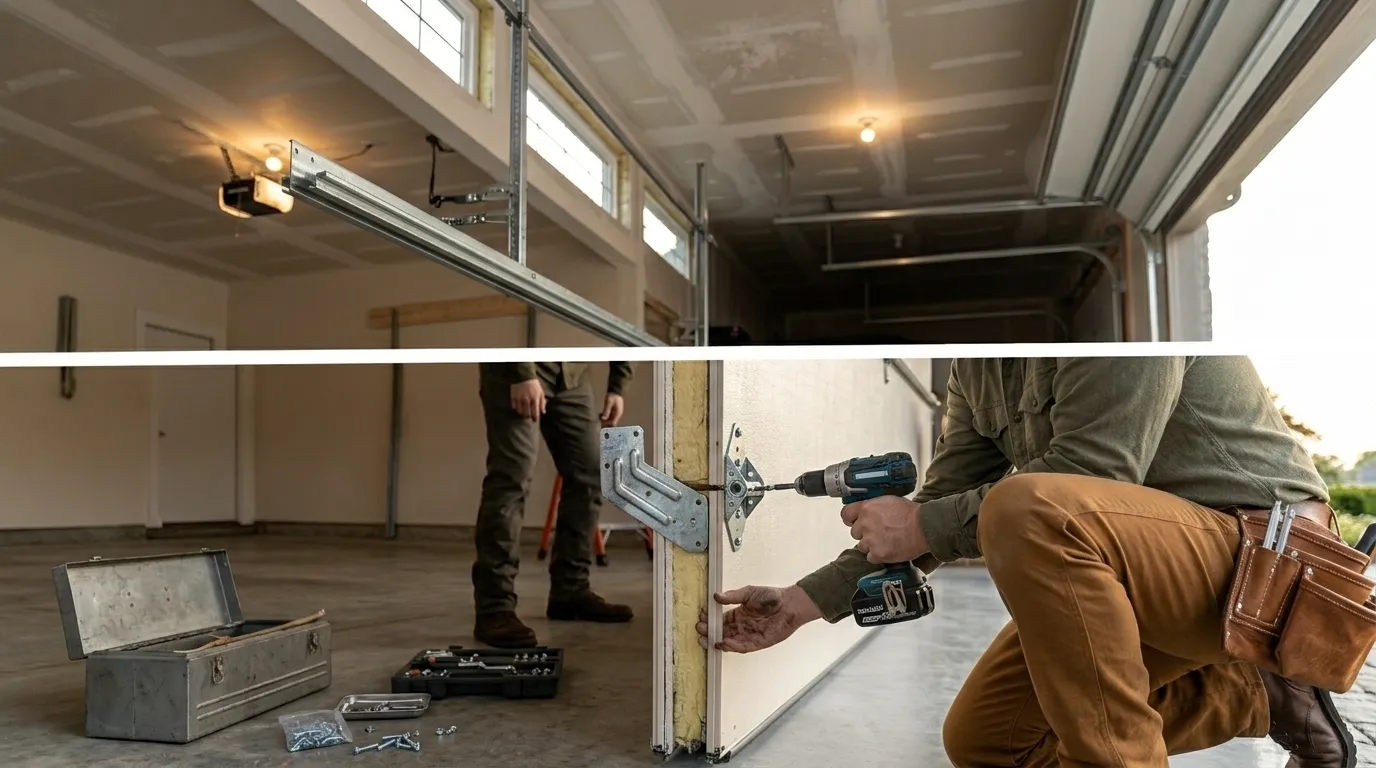
Most houses in Belleair went up around 1975, and a lot of those garage doors are still running the rollers that came with the house. Steel rollers on steel tracks, no seal, no bearing to speak of. If yours has never been swapped, that's not surprising - rollers are the kind of part nobody thinks about until the door starts sounding like a shopping cart.
You can replace rollers yourself if the door is off tension and you know how to get the hinges free without the panel dropping on your hand. What you should not do is anything at the bottom bracket on a torsion-spring door, because that bracket carries cable under load and it will not forgive a mistake. If your rollers are original steel and worn into a groove, the track has probably worn with them, and at that point you're not doing a roller job anymore - you're doing a track-and-roller job, and that's worth having someone look at before you start pulling hinges.
We come out of Largo, and Belleair sits about 4 miles down the road, so drive time isn't the long part of the visit. The work itself - pulling ten or twelve worn rollers off a double door and setting new ones - usually runs under an hour once the door's up on the truck's jack and off tension. Single doors go faster.
What slows a job down here specifically is when the original 1975-era track has worn oval instead of round, which happens after decades on steel rollers with no bearing. If the track needs straightening or swapping section by section, that adds time on top of the roller swap itself. We won't know which situation your door is in until we've got it open and can see the wear pattern, so we look before we quote the full job.
We don't post roller prices here because the right answer depends on what's actually on your door - plastic rollers with no bearing, steel rollers, or the newer sealed nylon rollers, and how many of the ten to twelve rollers on a double door actually need replacing versus just the ones that are grinding. A full set costs more than replacing the two or three that failed, but if the rest are the same age and same wear, doing them all at once means we're not back out in six months for the next one.
Belleair's median household income runs well above the wider service area, and we mention that only because it changes what people ask for - more homeowners here ask us to go straight to sealed nylon rollers instead of patching with steel, since the nylon set costs more up front but runs quieter and doesn't need lubrication on the same schedule.
On a door built around 1975, the first sign is usually noise - a rhythmic clunk or grind as each roller hits the same worn spot in the track, once per roller per open-and-close cycle. Because this stretch of the county sits in a mild, temperate band with no hard freeze and no real ice, rust isn't usually what kills these rollers. It's dry bearings and decades of the same steel-on-steel contact wearing a flat spot into the wheel.
Second sign is the door catching or hesitating partway up, which means a roller has worn enough that it's no longer riding the track cleanly - it's binding. Left alone, a binding roller puts side load on the track itself, and that's how a roller problem turns into a track replacement. If your door is from the original build era and has never had the rollers touched, grinding noise on a still-smooth-running door is the cheap warning; catching partway up is the expensive one.
We carry sealed nylon rollers in the common stem lengths, along with steel rollers for anyone who wants to match what's already on the door rather than upgrade. Both go on the truck because plenty of doors in this area still have the original 1975-era hardware and the household doesn't always want to change the whole feel of the door, just fix the noise.
Honest limitation: we don't stock every track profile on the truck. Most doors take a standard track width, but if a Belleair house has an odd or older custom track section that's warped along with the rollers, we may need to order that piece rather than swap it same-visit. We'd rather tell you that up front than start a job we can't finish that day.
If the house was built anywhere near the neighborhood's 1975 median build year and nobody's mentioned replacing rollers, yes - steel rollers with no bearing were standard then, and they don't fail on a schedule. They wear until they grind, which can take decades in this mild climate.
No. We run out of Largo, about 4 miles away, and drive out for the job. There's no local branch or drop-off point here - we bring the parts and tools on the truck.
Not always. On older tracks worn from decades of steel rollers, the noise can be the track itself, not just the wheel. We check both before quoting, since a track-and-roller job costs more than a roller swap alone.
If the rollers are all the same age - which is typical on an untouched original door - replacing just the loud ones usually means we're back for the next one within a year or two. Most homeowners here choose to do the full set once they're already open.
Call now or request a free quote - same-day service on most repairs, upfront written pricing.
