Largo, FL · Garage Door Service
East Lake homes went up around 1990, later than most of the county's stock. Here's what that means for roller wear, cost, and whether replacement makes sense.
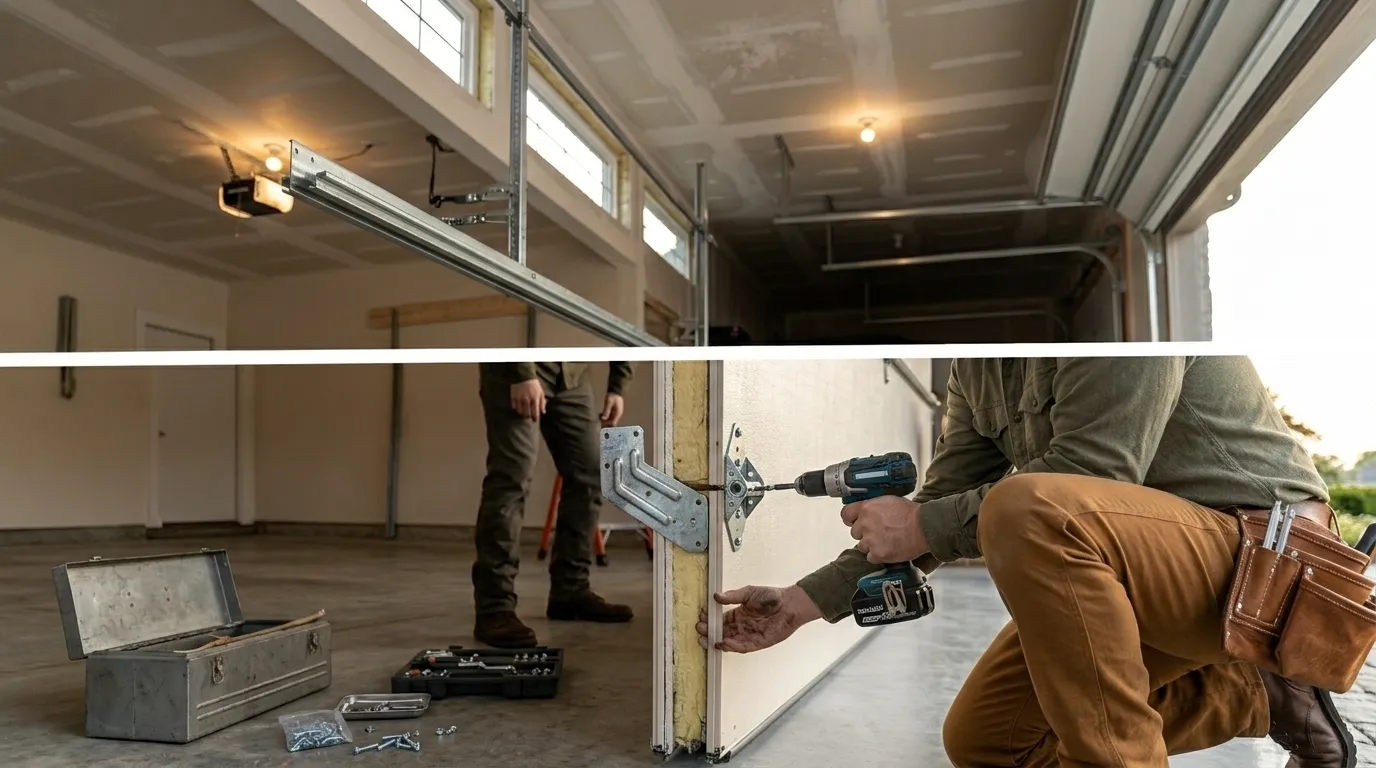
East Lake's median household income sits at $93,862, and that number matters more here than in older parts of the county. When a roller job on a double door runs into the few hundred dollars, a homeowner at that income level is usually deciding between "fix it now" and "is this worth calling anyone about at all" rather than stretching a budget. That's a different call than it is on a 1960s house with a worn-out track system and three other problems stacked on top. Most East Lake doors are singular-issue jobs: the rollers are shot, the rest of the door is fine, and the repair is straightforward because the door itself isn't fighting you. We come out from Largo, about 16 miles south, and on a clean roller swap that distance is really the only variable that adds time to the visit. The door itself, being newer, usually isn't the complication. That's worth knowing before you brace for a bigger bill than the job actually needs.
East Lake's median year built is 1990 - a full decade or two newer than a lot of the stock we work on elsewhere in the service area, where the range runs 1958 to 2001. Doors from that era typically shipped with steel rollers on nylon or delrin stems, not the sealed ball-bearing rollers you see on newer replacement doors. Thirty-plus years in, those factory stems dry out and crack before the roller wheel itself wears flat. You'll hear it as a grinding or clicking on the up-swing, usually worse on one side of the track than the other, and you'll often see white or gray plastic dust near the bottom rollers if you look. It's rarely sudden. It builds for weeks before someone finally calls, because a door that's merely noisy still opens.
Swapping the two bottom rollers is within reach for most homeowners - pull the bottom bracket bolts with the door down and the springs at rest, and the rollers slide out. The middle and top rollers are a different story. Getting those out means removing the section from the track while the door is under spring tension, and that's where a fair number of DIY jobs turn into an ER visit or a cracked panel. If your door is original to a 1990-built house, the tracks and hinges are also 30-plus years old, and hardware that age doesn't always come apart the way the video makes it look. We'd rather you call for the middle and top rollers than find out the hard way what a torsion spring does when it lets go mid-job.
A door built around 1990 is old enough that the roller stems are brittle but young enough that the track alignment is usually still true - which is actually the easier combination to work with. The complication shows up when only some of the rollers have been replaced before, usually after a partial DIY attempt, and the door is running on a mismatched set: some nylon, some steel, different stem lengths. That uneven wear pattern puts extra load on whichever rollers are original, and they fail faster than they should. We check all ten rollers on a double door, not just the noisy ones, because replacing two and leaving eight worn ones is a callback waiting to happen. One honest limit: if the track itself is bent or the door is sagging on one side, a roller swap won't fix that, and we'll tell you before we start rather than after.
For East Lake's roller profile - largely 1990s-era doors - we carry sealed ball-bearing rollers with both standard 7-inch and long 13-inch stems, since stem length varies by track depth and we don't want to guess wrong and make a second trip. Nylon rollers run quieter and are the better call for an attached garage where the noise carries into the house; steel-and-bearing rollers cost less and hold up fine in a detached garage. We stock both because a lot of East Lake garages are attached, and quiet matters more there than it does on an older detached setup. What we don't carry are exotic stem sizes for imported or custom doors - if that's what you've got, we'll need to order the part, and we'll say so on the visit rather than pretend it's on the truck.
The trip out from Largo is 16 miles, and for a roller job that's the main scheduling variable - we're not based in East Lake, so we route the visit around the rest of the day's calls rather than promising a same-hour arrival. Tell us the door's rough age when you call; if it matches East Lake's typical 1990 build year, we already have a good guess at what's on the truck before we're in the driveway. For the full range of door work we handle in East Lake, see the East Lake garage door service page. If you're comparing this against the Largo-based version of this same job, that's here: garage door roller replacement in Largo, FL.
We don't quote pricing without seeing the door, but at East Lake's income level ($93,862 median), most roller jobs stay well inside routine-maintenance territory rather than triggering a replace-the-whole-door conversation. That conversation only comes up when the track is bent or the door is sagging - a roller set alone doesn't push you there.
Often yes, at least partially. Steel rollers on nylon stems were standard through that era and typically last 15-20 years before the stems crack. If your door has never had roller work done, a 1990-built door is well past due, and that's usually where the grinding noise is coming from.
For the roller sizes common on 1990s-era doors - the bulk of what's in East Lake - we carry both standard and long stems on the truck. Custom or imported door hardware sometimes needs an order first; we'll tell you on the visit if that's the case rather than promise a part we don't have with us.
About 16 miles from Largo. We don't run a branch in East Lake, so the visit gets scheduled around the day's route rather than as a standalone rush call.
Call now or request a free quote - same-day service on most repairs, upfront written pricing.
