Largo, FL · Garage Door Service
Roller replacement for Pinellas Park homes built mostly around 1978. We drive the five miles from Largo with both nylon and steel stock on the truck.
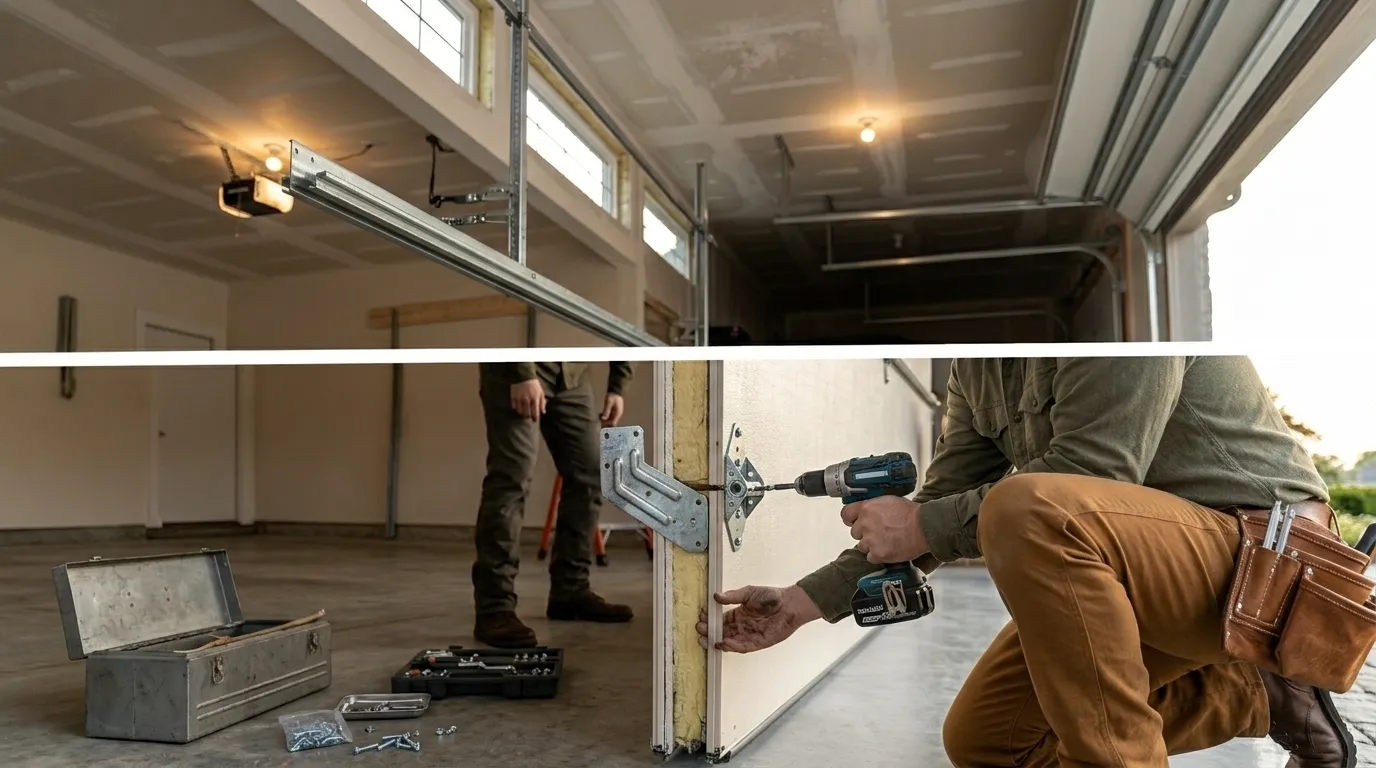
Pinellas Park is five miles from our shop in Largo, close enough that we stock for what we already know we'll find here rather than guessing. Most houses in this pocket of the service area went up between 1958 and 2001, with the bulk clustered around 1978, so the doors we pull rollers off are usually steel one-piece or early sectional units riding on the original steel-stem hardware, not the newer nylon-and-composite setups you see on doors built in the last decade.
We carry both. Sealed-bearing nylon rollers in 7-inch and 10-inch stem lengths for anyone upgrading off steel, and matching steel replacements for owners who want the original feel and don't mind the noise. We also carry the roller brackets and hinges that wear alongside the rollers themselves, because on a door this age the two usually fail together. If a track has warped from a roller that jumped its groove, we've got straight-run track sections on the truck too, so a bent section doesn't turn into a second appointment.
What we don't carry is custom-width track or oversized commercial rollers. Those get special-ordered, and we'll tell you that on the phone before we drive out, not after we're standing in your driveway.
Five miles is a short run, which changes how a roller call gets scheduled here compared with the far edges of the service area. We're not routing a truck across the county to reach Pinellas Park, so a roller job here usually slots in alongside other calls in the same stretch of the day rather than needing its own dedicated trip.
When you call, tell us how old the door is if you know it, or just the rough decade the house was built. Given that most homes in this part of the service area date to the 1960s and 70s, with the middle of that range sitting around 1978, we can usually tell from that alone whether we're bringing steel-stem or nylon stock as the primary option, and pack the other as backup. That cuts down on the back-and-forth once we're at the door.
We'll also ask whether the door is dragging on one side or both. A single bad roller near the bottom bracket is a different job, and a different amount of time on site, than a full set that's worn evenly across all the panels. Either way, the appointment gets booked around what you tell us, not a generic slot.
Pinellas Park sits in the mild temperate band, inland from the coastal strip a few miles west, so the wear pattern on rollers here tends to come from dust, grit, and plain age rather than salt-air pitting. On a door built in the 1960s or 70s, that usually means steel rollers that have gone from a smooth roll to a dry grind, sometimes with visible flat spots where the roller's been sitting in one position for years between uses.
The classic sign is noise that gets worse as the door travels, loudest at the top of the track where the roller works hardest against the curve. A second sign is a door that hesitates or hitches at the same spot every time, which usually means one roller has worn down enough that it's riding the edge of the track instead of the center.
On homes with original hardware from that 1978-median era, we also see roller brackets that have loosened over decades of vibration. Replacing the roller without checking the bracket is a half job, and it's the kind of thing that brings a homeowner back to square one within a year.
Rollers on the two upper panels, away from the bottom fixtures and the spring-loaded cables, are a reasonable DIY swap if the door is in the open position and you've got a clamp to hold the track section still. Pull the old roller stem out of the bracket, slide the new one in, and you're done, no tools beyond a wrench in most cases.
The bottom rollers are a different story. On a door from the 1958-2001 era, the bottom bracket is usually tied into the lift cable, and that cable is under tension from the torsion spring above it. Loosen the wrong bolt there and the door can drop or the cable can whip loose fast enough to cause a real injury. We don't recommend it, and honestly, most of the roller calls we get here are for exactly that bottom-corner replacement, because that's the roller that takes the most abuse and the one people are least willing to touch themselves.
If you're only dealing with a top roller and you're comfortable with a ladder, it's a fair job to do yourself. Anything touching the bottom bracket, call it in.
We drive out from Largo, about five miles away, so it's a short trip on our end. We don't quote a fixed response window here since it depends on the day's schedule, but being this close means we're not adding travel time on top of the job itself.
Depends on the door's age. Most houses in this part of the service area were built between 1958 and 2001, with a lot clustered around 1978, and doors from that era usually shipped with steel-stem rollers. If yours has been replaced since, it could be nylon already. We check on site before quoting.
Yes, if the rest are still round and quiet. We'll check each roller for flat spots and bearing play and only replace what's actually worn. Replacing a full set when three rollers are fine just adds cost without fixing anything.
Noticeably, yes. Steel rollers grind against the track, especially at the curve near the top. Nylon rollers with sealed bearings run quieter and don't need the same grease schedule. A lot of owners upgrading off original 1970s-era steel hardware go this route for that reason alone.
Call now or request a free quote - same-day service on most repairs, upfront written pricing.
