Largo, FL · Garage Door Service
Serving Seminole homes built mostly in the late 1970s, we handle the extension-spring and steel-panel doors that came standard on that era's construction.
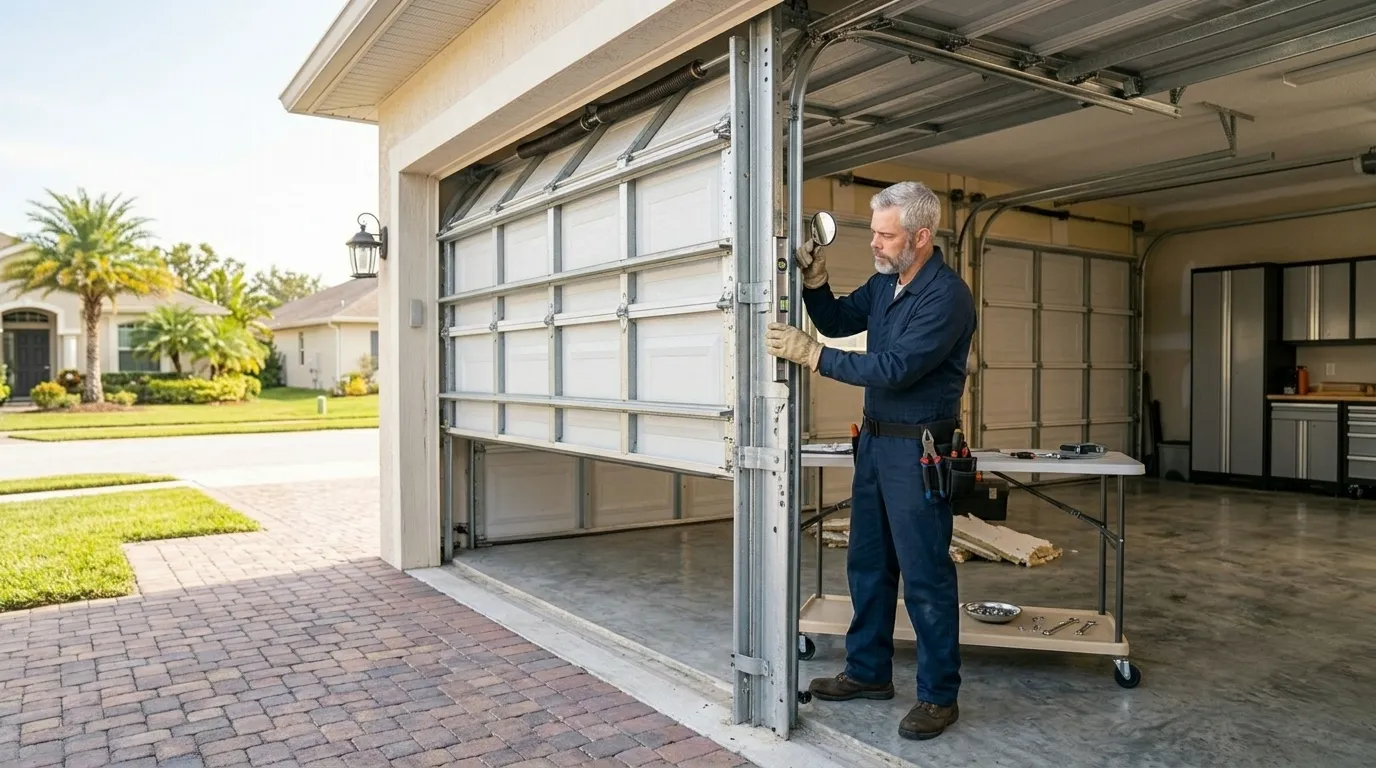
Most houses in Seminole went up around 1979, which sits right in the middle of the broader build window across this part of the county. That year matters more than it sounds like it should. Doors installed on new construction in the late 1970s almost always shipped with extension springs mounted along the horizontal track, not the torsion spring over the header that became standard later. The steel sectional door was replacing the old wood panel door around this same time, so you get a mix on any given street: original steel doors with their original extension-spring hardware, and a smaller number of even older wood doors that homeowners have kept going for decades.
We come out from Largo, about 4 miles up the road, so we're not guessing at what a Seminole garage looks like when a call comes in. The extension-spring setup has its own failure pattern - frayed cable at the pulley, a broken spring that lets the door slam because there's no safety cable threaded through it, hinges worn oval from forty-plus years of the same door lifting the same weight. That's a different repair than the torsion-spring jobs common in newer neighborhoods, and it's worth knowing before a tech shows up.
When you call about a Seminole address, the first thing we ask is the age of the house and whether the door has ever been replaced. That tells us more than a photo will, because a 1979-built garage with its original door is a different job than a 1979 house with a door swapped out in the 2000s. We travel from Largo for every call here, so there's no local branch stock to check - what goes on the truck gets decided before we leave.
Seminole's household income runs lower than some of the other suburbs we cover, at a median around $77,335, and that shapes the conversation too. We'll tell you straight when a repair makes sense and when a forty-year-old door with rusted track and a warped bottom panel is throwing good money after bad. Booking in is just a phone call - tell us what the door is doing (won't open, opens partway, makes a grinding noise, cable snapped) and we'll tell you roughly what that points to before we even get in the truck.
For a town with Seminole's housing age, the truck carries extension springs in the common weight ranges, safety cables to retrofit doors that were installed before those were required, and steel roller and hinge sets sized for older track profiles. We also carry torsion hardware, because plenty of Seminole doors have already been replaced once or twice since 1979 and came back with modern conversions.
We don't stock every obsolete part. If a door still has its original wood jamb hardware or a spring size that stopped being manufactured years ago, that part may need to be ordered rather than pulled off the truck same-visit. That's the one honest limit here - we'd rather tell you a part needs a day or two to come in than push a mismatched spring onto your door because it's what's on hand.
On an extension-spring door, the first thing we check is whether a safety cable is present and threaded through the spring. If it isn't - and on original-hardware Seminole doors it often isn't - that gets added regardless of what else the job needs, because a spring failure without one can send steel across a garage. From there it's the usual diagnostic: cable tension, pulley wear, hinge play, and whether the track is still square after decades of a heavier steel door riding on hardware sized for something lighter.
Mild coastal humidity in this part of the county doesn't crack hardware the way freeze-thaw climates do, but it does accelerate rust on unsealed springs and track bolts, so a lot of what looks like a broken part is really corrosion that's been building for years. We adjust and lubricate what can be saved and replace what can't, and we'll show you the worn part before it goes in the truck's scrap bin.
An extension spring under tension is not a safe DIY repair - that's true regardless of the house's age, and it's the reason we don't walk homeowners through spring swaps over the phone. What you can safely check yourself: whether the safety cable is intact, whether the door is binding on one side of the track more than the other, and whether the opener's force setting has drifted (a door that reverses before it touches the floor is usually an opener adjustment, not a spring problem).
If your Seminole house still has its 1970s-era door and you're not sure what hardware is on it, that's worth a call before you touch anything. Older extension-spring setups look simple but store real force, and a cable that's been fraying quietly for years can let go while you're standing under it.
Houses built around 1979, which covers most of Seminole, typically came with extension-spring hardware and steel doors replacing the older wood style. That hardware fails differently than the torsion springs common in newer builds, so knowing the house's age tells us what kind of repair to expect before we arrive.
No. We work out of Largo, about 4 miles away, and travel to Seminole for every call. There's no local depot here, so what we bring is decided based on what you describe over the phone.
Sometimes, sometimes not. If the track and frame are square and the panel isn't warped, a spring or hardware repair can add years of use. If the door is original steel from the late 1970s with rust through the panel, replacement usually makes more financial sense than repeated repairs.
Extension spring cables fraying at the pulley, and missing safety cables on doors that predate that requirement. Both are common on original hardware from houses built in the late 1970s and both are worth checking even if the door still seems to work fine.
Call now or request a free quote - same-day service on most repairs, upfront written pricing.
