Largo, FL · Garage Door Service
Four miles from our Largo shop, Seminole's 1970s-era homes bring specific spring and track wear. Same-day trucks, straight talk on what's worth fixing.
Seminole sits about four miles from our shop in Largo, which is close enough that a tech isn't burning half the appointment window just getting there. That matters more than it sounds like it should: a short drive means more of the visit is spent with a hand on your door instead of on the road, and it means we can usually work you into the same day instead of pushing you to tomorrow.
The short trip also means we see a lot of Seminole in a given week, and the pattern is consistent. Housing here runs a median build year of 1979, right in the stretch of construction that filled out this part of the county through the 60s and 70s. That's older gear than a lot of newer developments further out, and it shows up as worn rollers, tired torsion springs, and openers that are on their second or third remote by now. We're not guessing at what we'll find when we pull up - we already have a decent idea before we knock.
Because the drive from Largo is short, booking a call in Seminole is usually a same-day-or-next-day conversation, not a week-out wait. Tell us what the door is doing - won't open, opens crooked, makes a bang when the spring lets go - and we can usually tell you on the phone whether it's a same-visit fix or something that needs a part ordered first.
We don't run a branch office in Seminole; every truck comes out of Largo, so the four-mile distance is baked into how we schedule the day rather than something you need to think about. If you want the broader rundown of how scheduling, estimates, and service calls work across the area we cover, that's laid out on our main Largo service page. This page is just about what shows up at your door here.
With a median household income of $77,335 across roughly 8,989 households in Seminole, most of the calls we run here are repair-and-keep-it-going jobs rather than full replacements bought on a whim. That shapes what we carry: torsion springs in the common sizes for single and double doors built in the late 70s, standard-drum and low-headroom cable sets, and rollers in both nylon and steel because homes from this era got a mix of both depending on what the original builder spec'd.
The mild coastal climate down here doesn't bring the freeze-thaw damage you'd see up north, but it does mean humidity and salt air work on hardware over decades - hinges and bottom brackets corrode faster than the springs do, and that's often the actual reason a door starts binding even when the opener seems fine. We stock those wear parts specifically because of how consistently they turn up in this stretch.
A door on a home built around 1979 almost always means torsion spring hardware mounted the way builders standardized it by then - not the older side-mounted extension springs you'd find on anything from a couple decades earlier. That's good news for repair speed: parts availability for this era's hardware is solid, and a broken spring or worn cable is usually a same-visit job once we've confirmed the size and wind.
Where it gets slower is if the opener itself has failed and the model's been discontinued, which happens on units that age. We'll tell you straight if a replacement opener makes more sense than hunting a part for one that's twenty-plus years old - that's not us upselling, it's math. A new opener install often costs less in labor than tracking down obsolete circuit boards.
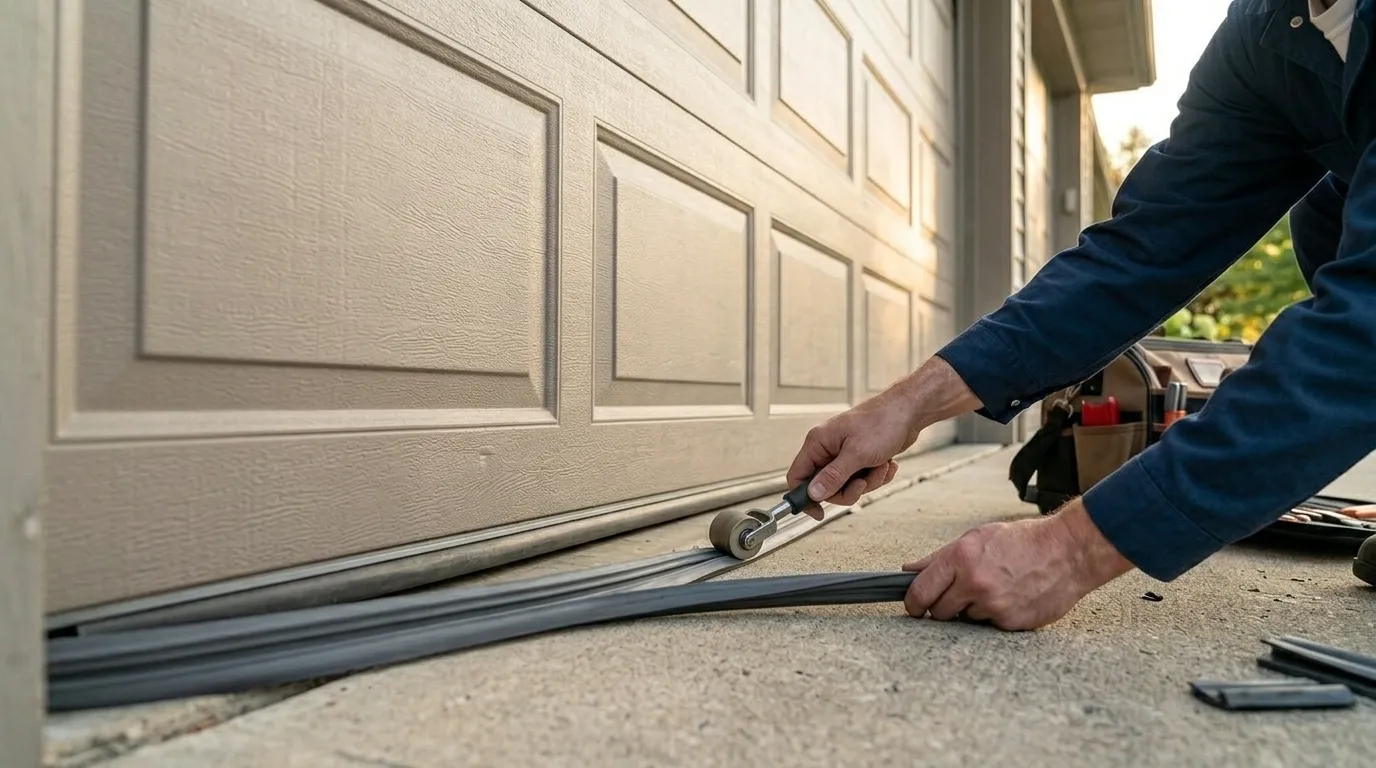
There's real DIY territory on a door this age: lubricating rollers and hinges, tightening loose hardware, replacing weatherstripping along the bottom, and swapping a remote battery. None of that needs a call.
What we'd genuinely tell you to leave alone is the torsion spring itself. On a standard residential door that spring is under enough tension to break a bone or worse if the winding cone slips, and that risk doesn't change because the door's a few decades old - if anything, older brackets and rusted set screws make it more likely to let go wrong. If the door won't open, sags on one side, or you hear a loud bang followed by the door refusing to budge, that's a spring failure. Call it in rather than climb a ladder at it.
We don't quote a fixed response time, but the drive itself is short - about four miles - so Seminole calls typically slot into the same day or the next one rather than a longer wait. Exact timing depends on the day's schedule.
Every truck runs out of Largo. There's no separate branch or depot in Seminole - the four-mile trip is just short enough that it doesn't change how quickly we can get to you.
Not usually. Torsion spring hardware from that era is a common standard, and we stock the typical sizes. It's discontinued opener models, not springs or cables, that occasionally take longer to source.
It's harder on hardware more than on the door panel itself. Hinges, bottom brackets, and fasteners corrode faster in this climate than springs do, which is why a door can start binding well before the opener or spring actually fails.
Call now or request a free quote - same-day service on most repairs, upfront written pricing.
