Largo, FL · Garage Door Service
Seminole homes cluster around a 1979 build year, a year past the wider service area's median. That one-year gap still shapes which springs and openers wear out first.
Seminole's housing stock centers on 1979 - a year past the median of 1978 across the whole service area we cover out of Largo. That's a small gap on paper, but it puts a lot of Seminole garage doors right at the tail end of the same build wave: steel sectional doors on extension or early torsion setups, openers that have usually been swapped out once already by now. Seminole is one of the 25 named areas where that late-1960s-to-1970s construction dominates, so the fault patterns we see here aren't a mystery - they're the same handful of failures that show up whenever a door and its hardware cross the 40-to-50-year mark. Rollers that have gone from nylon to hardened plastic and back to metal because someone grabbed whatever was on the shelf. Cables with rust starting at the bottom roller bracket. Openers with logic boards that finally give out after two decades of Florida humidity cycling through the garage. We're not guessing at your door's age when we get there - the build year already tells us most of what we need to know before we open the panel.
We run this out of Largo, four miles up the road, so a Seminole maintenance visit isn't a special trip - it's a short one. We ask a few things before we schedule: the door's approximate age if you know it, whether the opener has ever been replaced, and whether the door has been sticking, groaning, or drifting off-track when it closes. None of that locks in a price over the phone; it just means the truck comes loaded for the job that's actually likely, not a generic tune-up kit. Seminole's roughly 8,989 households skew toward that same late-70s build era, so most of our maintenance calls here follow a pattern: lubrication and hardware inspection first, then a straight answer on whether anything needs replacing now or can wait another season.
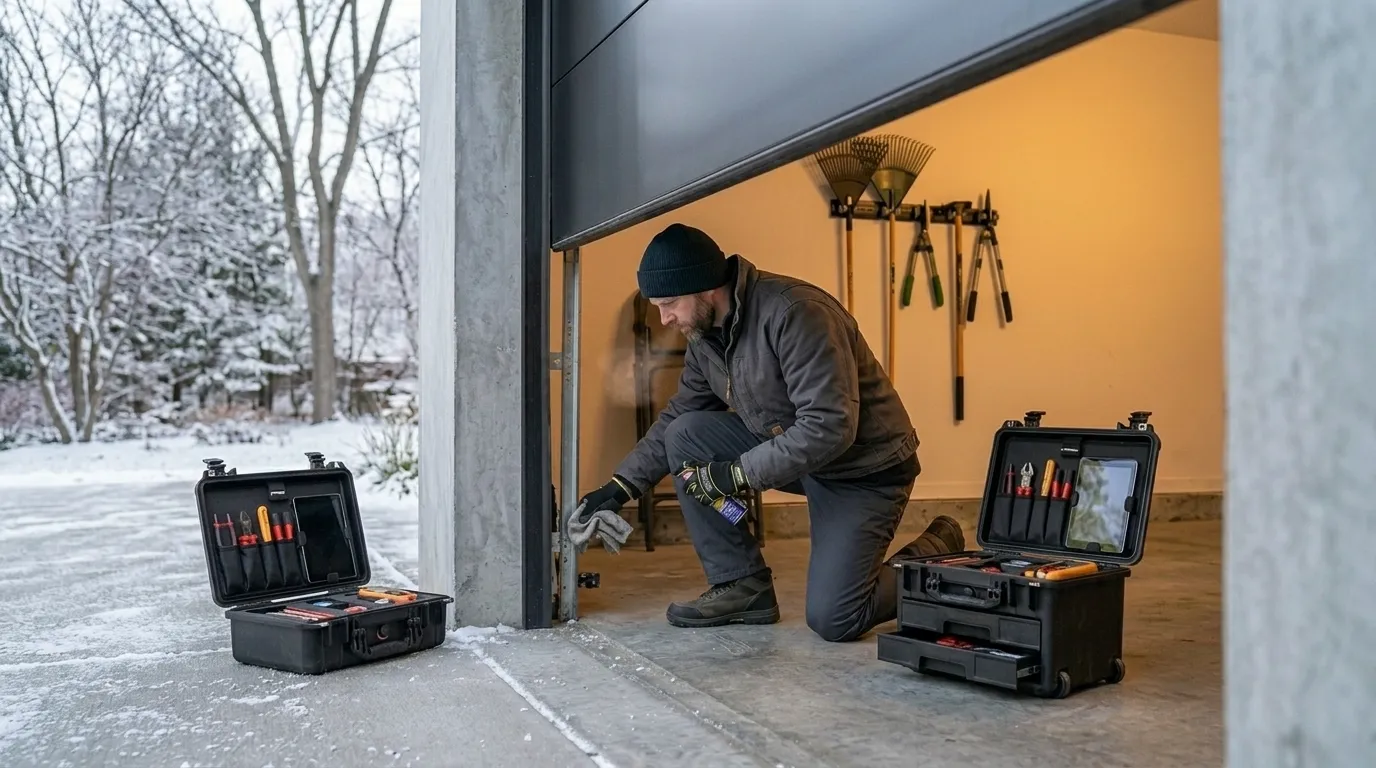
For a maintenance visit on a door from this era, the truck carries torsion spring sets sized for the older drum styles that were common through the late 1970s, standard-lift cable, and both nylon and steel rollers - because by now most Seminole doors have a mix of both from past patch jobs. We carry lubricant rated for the mild, humid climate this whole area sits in, not a general-purpose grease that gums up in a Florida garage by August. We also carry basic hinge sets and roller brackets, since those wear out well before the door itself does. What we don't carry as standard stock is a full replacement door panel - those are ordered to match, not pulled off the truck, so if a panel's cracked or dented past repair, that part of the job gets scheduled separately.
A maintenance visit isn't a guess-and-grease job. We check spring tension and balance first, because a door that's even slightly out of balance puts extra strain on the opener motor every single cycle - and on a door built when Seminole's median household income sat at $77,335 (well under the wider service area's $93,862), most owners want the opener to last, not get replaced early because a spring was ignored. We inspect the track for bends or gaps at the wall brackets, tighten hardware that's worked loose from years of vibration, and test the auto-reverse safety function, since that's one thing that degrades quietly on older units and nobody notices until it fails. If a part is close to the end of its life but not dead yet, we say so and give you the option to wait - we're not selling a full teardown when a $30 part gets you another two years.
There's real maintenance a Seminole homeowner can do between visits: wipe down the tracks, check that the door doesn't drift when disconnected from the opener and lifted by hand, and listen for grinding or popping sounds that weren't there before. What you shouldn't do yourself is touch the torsion spring - those store enough force to cause a serious injury, and on a door built in the 1979 window, the spring and drum combination is often original or close to it, which means it's more likely to be under more tension than a newer part, not less. If you're not sure whether a sound is normal wear or a warning sign, that's a five-minute phone call, not a guess.
Most Seminole homes were built around 1979, which puts a lot of garage doors and their original hardware - springs, drums, cable - at somewhere between 40 and 50 years old if nothing's been replaced. That's well past the point where routine maintenance stops being optional.
No. We run out of Largo, about four miles away, and cover Seminole as part of that service area. There's no separate branch or depot here - the truck comes from Largo for every visit.
There's no single number that fits every door, but a door from the late-1970s build era carries more risk of spring fatigue and rusted hardware than a newer one, so it's worth having it looked at before you notice a problem, not after the door won't open.
Not as a default. A maintenance visit checks balance, hardware, and safety function first. If the opener's logic board or motor is actually failing, we'll tell you and talk through replacement separately - we don't swap parts that aren't the problem.
Call now or request a free quote - same-day service on most repairs, upfront written pricing.
