Largo, FL · Garage Door Service
Seminole homes date mostly to 1979, so original openers are long gone. We diagnose worn gears, dead boards, and remote issues from our Largo shop, 4 miles away.
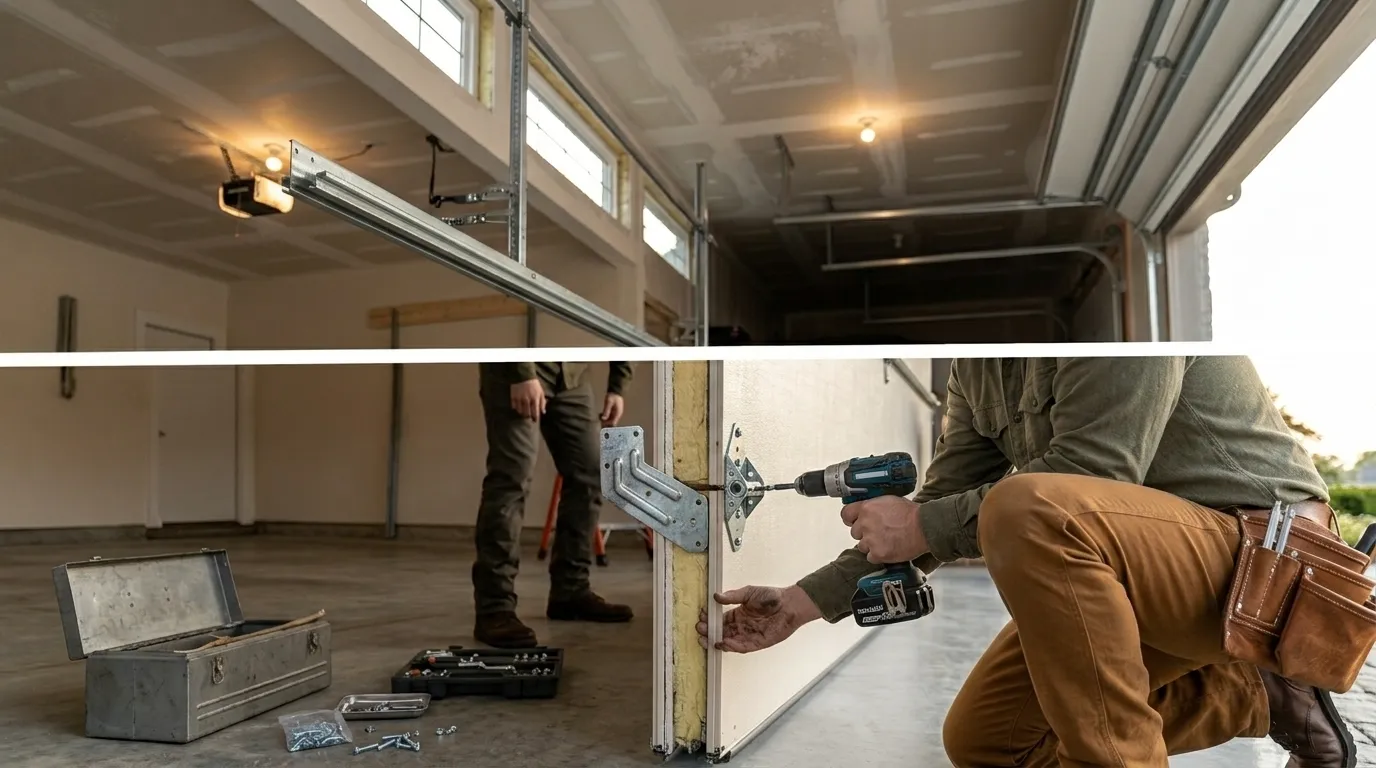
Most houses on this stretch of Seminole went up around 1979, right in the thick of the county's 1958 to 2001 building run. That matters more than it sounds. An opener from that era is not the one hanging in the garage today - it's been replaced once, sometimes twice, and each swap left behind mismatched hardware: a newer motor head bolted to an old wood header, wiring pulled through a junction box nobody's touched since Carter was president. What we see on these calls isn't storm damage or heat failure, since this stretch of Florida runs a mild temperate band without the wild swings that fry circuit boards. It's mechanical fatigue and electrical drift - worn drive gears on belt and chain units, logic boards that finally give out after years of humidity cycling through an unconditioned garage, and remotes that stop syncing because the receiver itself is aging out. With 8,989 households in Seminole, most sitting on that same late-1970s bones, we run into the same three or four failures again and again rather than something new every job.
We work Seminole out of our Largo shop, about 4 miles up the road - there's no branch office or drop point in town, so when you call, you're booking a truck that's coming from Largo, not one already parked around the corner. That's worth knowing up front so nobody expects a same-block response. Seminole's median household income runs $77,335, noticeably below the $93,862 median across the wider service area we cover, and that number actually shapes the conversation on the phone: we'll usually ask a couple of questions about the opener's age and symptoms before the truck rolls, so we can bring the right board or gear kit instead of guessing. If your opener is dead silent, grinding, or running the motor without moving the door, tell us that on the call - it narrows down whether this is a five-minute fix or a bigger one.
Given how much of Seminole's garage stock traces back to the late 1970s and early 1980s, we carry the parts that fail on chain and belt-drive units from that generation - drive gears, sprockets, capacitors, and logic boards for the more common motor housings. We also carry current safety-sensor kits, since a lot of these older openers have had at least one sensor retrofit over the decades and the alignment brackets are usually the first thing to bend or corrode. Here's the honest limit: we don't stock every board for every discontinued opener model. Some manufacturers stopped making replacement parts for units built in that window years ago, and if your motor housing is one of the orphaned ones, we'll tell you straight that a full opener swap is the faster and often cheaper path rather than chasing a part that may take weeks to source.
First we check the simple things a lot of homeowners skip - power at the outlet, the wall switch, the remote's battery - before touching the head unit. On these older Seminole setups, the next stop is usually the drive mechanism: chain slack, belt fraying, or a stripped gear that lets the motor run without moving the door. If the motor turns but nothing happens, that gear is almost always the culprit, and it's a straightforward swap on most models from this era. If the board itself is dead - no lights, no response to the wall button or remote - we test it against the transformer and safety sensors before ordering a replacement, since a bad board is sometimes actually a bad sensor wire pretending to be something worse. We don't replace an opener outright unless the housing, board, and drive are all past the point of parts support - that's a bigger cost and we'd rather earn it than assume it.
Before you call anyone, check the obvious: is the wall switch getting power, are the safety sensor lights solid and not blinking, and did anyone recently reset a breaker in the garage. Those three things account for a real share of calls that turn out not to need a truck at all. You can also visually check the drive rail for a loose chain or a belt that's slipped off its track - if you see slack you can push the door by hand with the opener disconnected, that's a fair sign the drive mechanism, not the motor, is the issue. What you shouldn't touch is the motor housing itself or anything involving the torsion spring system above the door - on a house built in this era, that hardware has had forty-plus years to corrode and loosen, and it can let go with enough force to hurt someone. That part of the job is ours, not a weekend project.
That's almost always a worn drive gear or a slipping chain/belt, not the motor itself. On houses from Seminole's typical 1970s-80s build era, that gear has usually gone through decades of cycling and finally strips just enough teeth to let the motor spin without fully engaging the door.
No. We run Seminole jobs out of our Largo location, about 4 miles away. There's no separate branch or depot in town, so every call is dispatched from Largo rather than a local base.
Depends what's failed. A gear, sprocket, or sensor is usually a straightforward repair. If the logic board is dead and the model's discontinued, sourcing parts can take longer than it's worth - at that point we'll tell you replacement is the faster, often cheaper call.
That points to the receiver inside the motor head, not the whole unit. It can be a dying receiver board or just a remote that's lost its programming after a power blip. We test the receiver against a fresh signal before assuming the board needs replacing.
Call now or request a free quote - same-day service on most repairs, upfront written pricing.
