Largo, FL · Garage Door Service
Largo's housing stock dates mostly to 1958-2001, so a lot of garage openers here predate battery backup. Here's what that means for power cuts and repairs.
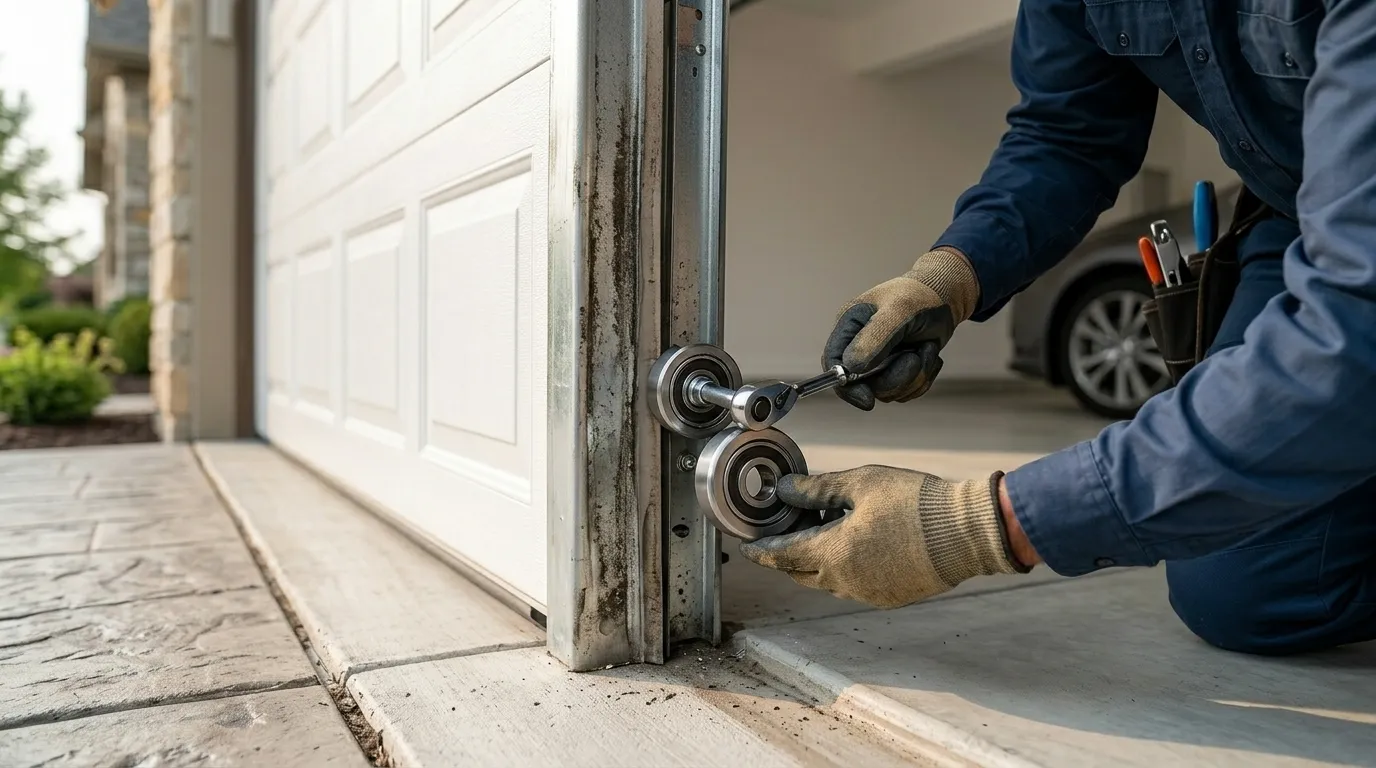
We're not going to list a number here because opener jobs vary too much to be honest about a flat price - a chain-drive replacement is a different job than adding battery backup to an existing unit, and a board repair is different again from a full swap. What we can tell you is what drives the cost in a town like Largo: age of the unit, whether the drive is chain, belt, or screw, and whether you want battery backup added so the door still opens when the power drops. Given that most houses here were built between 1958 and 2001, with a lot of that stock from the 1960s and 70s, we see plenty of openers that were never built with a battery backup option at all - retrofitting one is a different line item than replacing a dead motor with an equivalent unit. If your opener is original to a house from that era, expect the conversation to include whether it's worth upgrading the whole unit rather than patching the one that's there. We'll give you the actual number after we look at what's on your ceiling, not before.
A big share of Largo's homes were built between 1958 and 2001, with the median landing around 1978, spread across roughly 25 named pockets of the city that each went up in their own wave. That matters for openers because the units installed when those houses were new are, in a lot of cases, still the units on the ceiling now. Chain-drive motors from that period were built to run a door, full stop - no battery backup, no smartphone link, sometimes no photo-eye safety sensors if the opener predates the code requiring them. Across the wider service area there are 68,764 owner-occupied houses, and a good number of them are carrying opener technology that's decades behind what's sold today. The situation isn't that these openers are broken - plenty still run fine day to day. It's that they're one power blip or one worn gear away from being the appliance the household reacts to only after it stops working, because there was never a reason to think about it before that point.
Largo sits in a mild temperate band, which is the main thing working in your favor. You don't get the freeze-thaw cycling that cracks door seals or stiffens torsion springs in colder climates, and that means the mechanical side of an opener setup here tends to age more slowly than it would up north. What the mild, humid climate does do is work on the electronics and the metal contacts inside older opener units - circuit boards and terminal connections don't love sustained humidity any more than they love cold, they just fail differently, usually as intermittent glitches before a full stop rather than a sudden freeze-related crack. On a house from the 1960s or 70s original opener, that slow electrical drift is often the first sign something's wearing out, well before the motor itself gives up. It's a quieter kind of wear than a northern town sees, but it's still wear, and it tends to show up as the opener working fine most days and then not responding at all on a humid one.
Call when the opener stops responding to the remote or the wall button but the door still moves fine when you pull the manual release cord - that's almost always the opener itself, not the door hardware, and it's worth having someone look before you're stuck using the manual release every day. Call also if you've never had battery backup added and you want the door to open during a power cut, since that's not something you retrofit at 11pm when the power's already out. One honest limit: if the opener is original to a house built in the 1960s or 70s, we're often not going to recommend repairing a dead motor board - parts for units that old are hard to source, and a new opener with battery backup built in usually costs about the same as chasing down a replacement part for one that's 50 years old. We'll tell you straight which side of that line your unit is on.
Most openers run on standard household power and have no backup battery unless one was added. If your house dates to the 1960s-70s wave common across Largo, the original opener almost certainly predates battery backup as a feature, so a power cut means using the manual release cord until power's back.
Largo sits in a mild temperate band, so you avoid the freeze-thaw damage that hurts openers and springs up north. But sustained humidity here does wear on circuit boards and electrical contacts over time, which often shows up as intermittent response issues in older units before a full failure.
If the opener is original to a house from the 1960s or 70s, parts are often hard to find, and a new unit with battery backup built in can cost about the same as sourcing an old board. We'll look at your specific unit and tell you honestly which way it leans.
Call now or request a free quote - same-day service on most repairs, upfront written pricing.
