Largo, FL · Garage Door Service
Torsion springs, rusted rollers, and openers that quit - repair issues common to Largo's 1960s-70s housing stock. Local diagnosis and same-visit fixes.
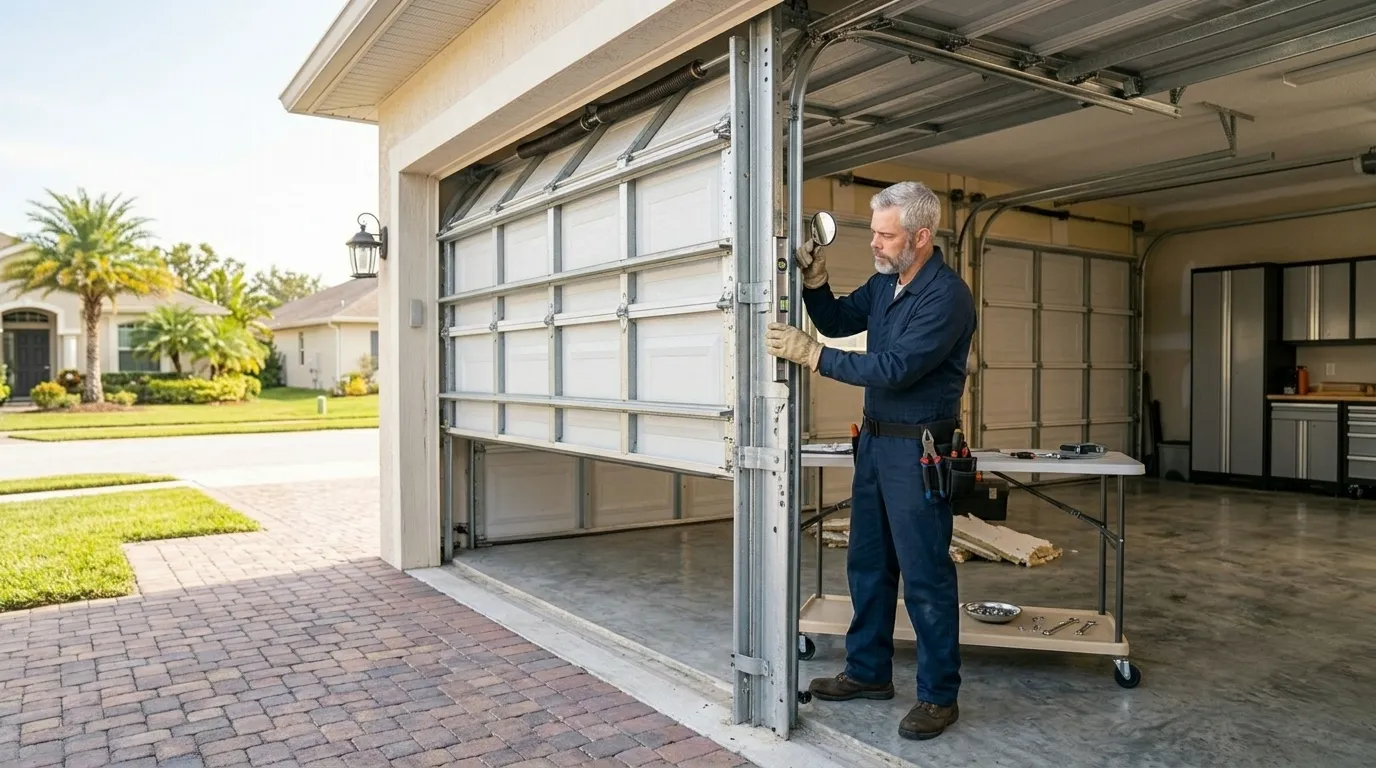
Most houses in Largo went up between 1958 and 2001, with the median build year landing around 1978. That means a huge share of the doors we get called on still run the original torsion or extension spring setup from whenever the house was last remodeled, or worse, never touched since. Springs are rated for a set number of cycles, and after four or five decades of daily use, metal fatigue is the norm, not the exception, whether or not the door has ever failed before.
The mild coastal climate in this part of Pinellas County doesn't put doors through freeze-thaw stress the way it does further north, but it does mean near-constant humidity and salt-tinged air working on exposed steel year-round. On a 1970s-era door, that shows up as rust bloom on the spring coils, pitting on the track bolts, and hinges that seize instead of pivot. It's a slower failure than a snapped cable, but it's just as common across the older sections of town, and it's the reason a door that
On the older torsion setups still common here, the first sign is usually a door that feels heavier than it used to, or one that opens a few inches and then stalls while the opener motor strains. That's a spring losing tension, not a motor problem, even though the opener usually gets blamed first.
On extension-spring doors - more common on the smaller, older garages built before torsion systems became standard - you'll hear a loud bang from the garage, then find the door won't move at all. That's a spring giving out under a cable that's been carrying uneven load for years.
Humidity-driven corrosion shows up differently: a door that grinds or squeals on the way up, rollers that have gone from smooth steel to pitted and stiff, or a track that's shifted slightly because the mounting bolts have loosened in rusted-out wood jambs common to houses from the 1960s and 70s. None of these are emergencies on day one, but every one of them gets worse fast once the door starts binding, because a binding door puts extra strain on whatever hardware is left holding tension.
We don't post a flat number here because what a repair costs depends on what's actually failed - a single torsion spring swap is a different job than replacing a pair of extension springs, a bent track, or an opener that's stopped talking to its sensors. What we can tell you is what drives the cost on the older housing stock that makes up most of Largo: spring size and type (torsion vs. extension), whether the drums or cables need replacing alongside the spring, and whether corrosion has taken out the track hardware along with the spring itself.
One honest limitation: if your door is an older, less common panel size or an opener model that's been out of production for years, parts can take longer to source than a same-day fix, and we'll tell you that up front rather than promise a truck-stock part we don't have. Replacing a door that's rusted through at the bottom panel is sometimes the better call than patching it, and we'll say so instead of running up a repair bill on a door that's on its way out anyway.
If your door is stuck, making noise, or the opener's just given up, the fastest path is to call and describe what you're seeing - bang before it stopped, gradual heaviness, grinding on the way up. That tells us what's likely and what to bring on the truck. We work throughout the Largo service area, including out toward Belleair and Seminole, both about four miles off, so if you're on the edge of town that's not an issue.
We're straightforward about scheduling: we don't overbook a day and then push your call to tomorrow. If a job runs long because of what's found once the door's opened up, that gets communicated, not hidden in the invoice. Reach out through the site to get a visit set up.
A lot of Largo's housing was built between 1958 and 2001, with much of it dating to the 1960s and 70s. Springs installed then are well past their rated cycle life now, so it's common for a whole street built in the same wave to start having spring failures within a similar few-year window.
Likely, yes. Largo's mild coastal climate keeps the air humid most of the year, and on original steel hardware from a 1970s-era door, that means slow rust buildup on rollers, hinges, and track bolts rather than sudden failure. It's a maintenance issue that becomes a repair call once binding starts.
No. If a door's bottom panel has rusted through or the track hardware has corroded into the framing, patching it can cost nearly as much as replacing it and still leave you with an old door. We'll tell you when replacement is the better value instead of running up a repair bill.
It depends on the model. Common torsion springs and standard panel sizes are usually truck stock. Older or discontinued opener models and less common panel sizes can take longer to source, and we'll tell you that before starting the job rather than promise a same-day fix we can't back up.
Call now or request a free quote - same-day service on most repairs, upfront written pricing.
