Largo, FL · Garage Door Service
Largo Garage Door Pros drives 6 miles to Bay Pines for repairs on the extension-spring, single-skin steel doors typical of this area's 1970-built homes.
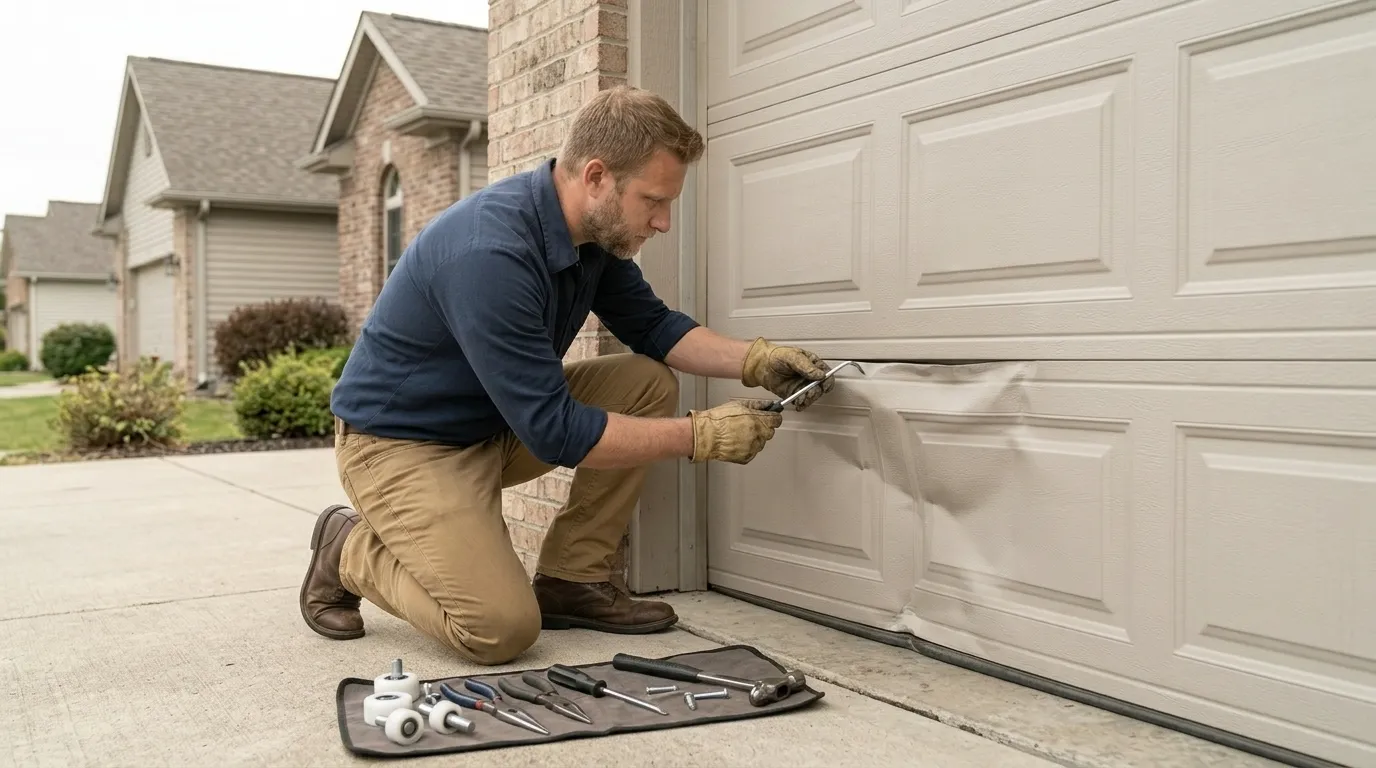
Most of the calls we get from this pocket trace back to one thing: the houses here mostly went up around 1970, which puts the doors on them a full generation behind what you'd find in newer parts of the coverage area. That means extension springs mounted on either side of the track instead of a torsion bar overhead, single-thickness steel panels with no insulation layer, and openers that have been swapped out once or twice already but bolted onto original track and hardware. The jobs we run here skew toward frayed or snapped extension spring cables, worn pulleys, and hinges that have loosened enough to let a panel sag at the seam. We also see a fair number of chain-drive openers grinding on stripped gears, since that's what came standard when these garages were built out. None of this is exotic work, but it's different work than a torsion-spring double door on a house built in 2005, and it changes what we bring on the truck before we even ring the bell.
This part of the service area has about 1,350 households, smaller than most of the named areas we cover, and a median income of $67,012 - well under the $93,862 median across the wider service area. That gap matters for how we talk about repair versus replacement: a full door swap that makes sense in a higher-income pocket isn't always the right call here, and we'd rather fix the spring or the roller than push a replacement nobody asked for. The build year here, right around 1970, sits earlier than the wider area's median of 1978, so the housing stock skews a bit older than what you'll find a few miles over. Garages from this stretch were mostly built with a single-car or narrow two-car opening, steel doors with a plain flush or short-panel face, and hardware sized for a lighter door than what's common today.
A door built around 1970 almost always means extension springs, not torsion - you'll see them running along the horizontal track near the ceiling rather than on a shaft above the opening. Those springs stretch and lose tension over years of cycling, and the safety cables that should run through them are often missing entirely on doors this old, since they weren't standard when the door went in. The steel skin on these doors is usually a single layer, no polystyrene or polyurethane core, which keeps the door light on the springs but also lets it dent and oxidize faster at the bottom panel where water sits after rain. The area sits in a mild temperate band, so we're not fighting the freeze-thaw cracking you'd get further north - what we see instead is corrosion at the bottom rail, rollers that have worn oval instead of round, and track brackets loosened from decades of a lighter door working against them.
We run out of Largo, about 6 miles from this stretch, and that's the drive for every call - there's no branch, drop box, or standing crew based in Bay Pines itself. It's a short enough run that it doesn't add much to how we schedule the day, but we want to be straight about it: you're getting a truck that travels to you, not a shop around the corner. If a job needs a part we don't carry as standard stock for older extension-spring setups, that can mean a short wait while we source it, since parts for 1970-era hardware aren't always sitting on the shelf the way modern torsion components are. We'd rather tell you that up front than promise a same-visit fix we can't back up.
Your door was likely installed when the house was built, around 1970, and extension springs mounted along the horizontal track were the standard setup then. Torsion springs over the opening became more common later. Both work fine when maintained, but extension springs wear differently and often lack the safety cable that keeps a broken spring from flying loose.
For a lot of homes in this area, repair makes more sense than a full replacement, especially for a spring, cable, or roller issue. We'll look at the panel condition and hardware first. If the door itself is sound, there's usually no reason to replace it just because the springs gave out.
No. We're based in Largo, about 6 miles away, and drive out for every appointment in this area. There's no local depot here, so scheduling accounts for that short drive, but it doesn't change what work we can do once we arrive.
This area sits in a mild temperate climate band, so doors here don't take the freeze-thaw damage you'd see further north. What we do see is corrosion at the bottom panel from standing water and worn rollers from age, which fits the wear pattern of a single-skin steel door installed decades ago.
Call now or request a free quote - same-day service on most repairs, upfront written pricing.
