Largo, FL · Garage Door Service
Westchase homes mostly went up around 2001, later than most of the service area, so the doors and openers need are different. We travel from Largo for the job.
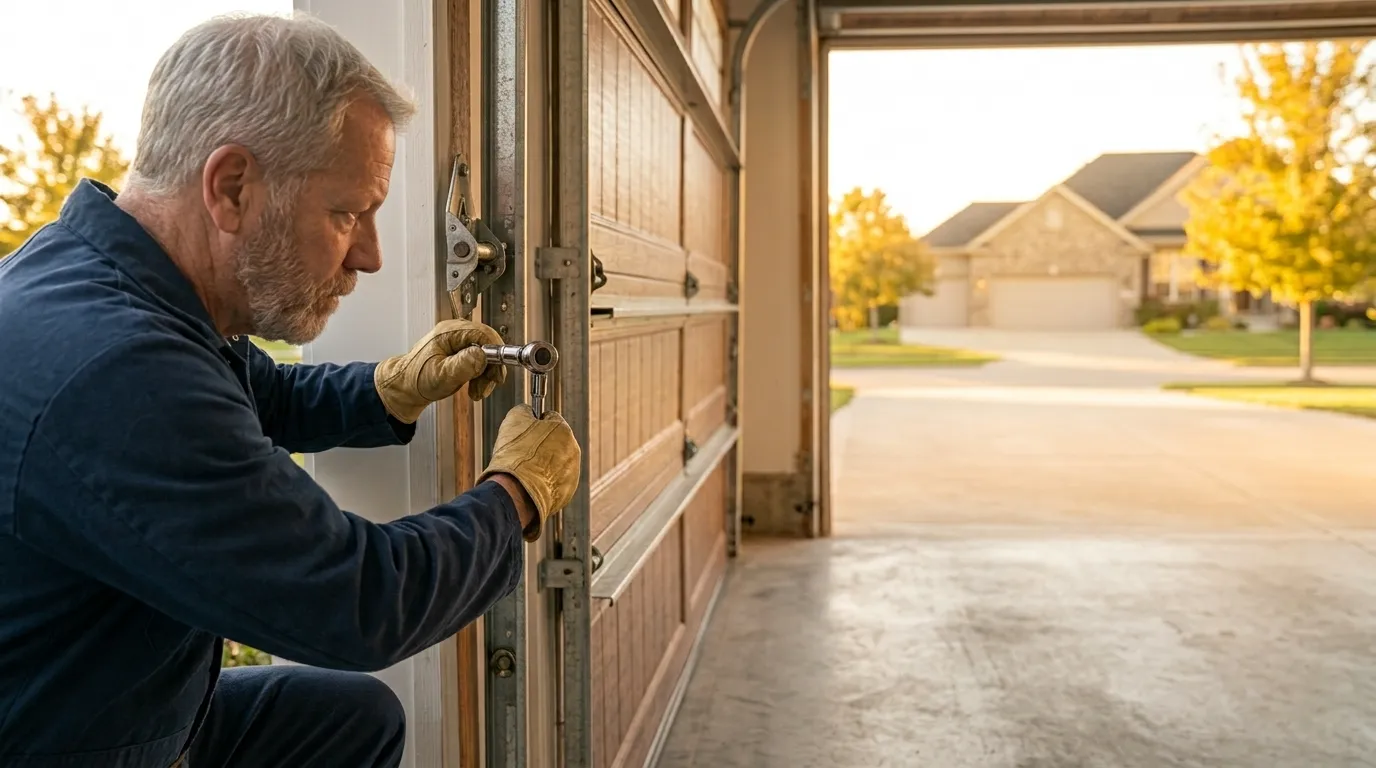
Westchase sits apart from a lot of the areas we cover because the houses here are newer. Median build year lands around 2001, well past the 1978 median for the wider service area, which runs from stock built as far back as 1958. That gap matters. A door built in 2001 was almost certainly installed with a factory torsion spring system and a chain or belt-drive opener from the early 2000s, not the older extension-spring setups you find in the 1960s and 70s pockets closer to Largo. So the calls we get out of Westchase tend to be different too: worn nylon rollers on 20-year-old tracks, openers reaching the end of their circuit board life, and torsion springs finally giving out after two decades of daily cycles. We still see the occasional bent track from a car bump or a cable that's frayed through, but we see far fewer of the seized, rusted-solid hardware jobs that come out of the older stock nearby. If your door is original to the house, it's due for a spring and roller check on age alone, not because anything looks obviously wrong yet.
With roughly 9,783 households and a median income of $120,070, Westchase reads as a newer-build, higher-income pocket relative to the broader area profile of 151,319 households and a $93,862 median across the service territory. That combination usually means garages built to code standards in place around the turn of the millennium, insulated doors more often than not, and openers with safety reversal sensors as standard rather than retrofitted. It also means owners here are less likely to be dealing with a door that's outlived three previous repairs and more likely to be dealing with one specific failed part on an otherwise sound door. The mild temperate climate across the region doesn't force the kind of seasonal expansion and contraction issues you'd get further north, so wood rot and metal fatigue from freeze-thaw cycles aren't a factor. What does show up after 20+ years, regardless of climate, is spring fatigue and opener electronics reaching end of life.
On a 2001-era door, the failure pattern is usually mechanical wear, not structural decay. Torsion springs are rated for a set number of cycles, and a door that's been opened and closed twice a day for two decades is right in the window where springs start to snap without warning. Openers from that build era often use circuit boards and logic that are past reasonable repair, so once the board goes, replacement is usually the honest answer rather than a patch. Tracks and rollers on houses this age are also due: steel rollers get noisy, plastic rollers crack, and a track that's slightly out of alignment from years of small shifts starts binding the door on the way up. We won't tell you to replace a door that just needs a spring and a roller set, and we also won't spend an hour chasing a wiring fault on an opener that's simply worn out. One real limitation: if a part for an older opener model has been discontinued, we may need to source a compatible replacement rather than an exact match, and that can add a day or two to the job.
We run out of Largo, about 14 miles from Westchase, so we're not sitting in a depot down the street. That distance doesn't change the work once we're on-site, but it does mean scheduling matters more than it would for a job three miles away - we plan the drive into the day rather than treating Westchase as a stop between closer calls. If you're comparing us to a company that's physically closer, that's a fair thing to weigh. What we bring instead is familiarity with what tends to go wrong on doors from this build era versus the older stock we see elsewhere in the territory, so the diagnosis is usually quicker once we're there.
If your house was built around 2001, your opener's circuit board is likely original and at the end of its practical service life. Boards from that era generally aren't repairable in a cost-effective way, and matching discontinued parts can take longer than it's worth. Full replacement is usually the more honest recommendation once a board fails outright.
No, we work out of Largo, about 14 miles away, and travel to Westchase for jobs. There's no local depot here, so we schedule the drive as part of the visit rather than treating it as a quick add-on between closer calls.
Torsion springs are rated for a set number of open-close cycles, and a door installed around 2001 with normal daily use is right in the range where springs commonly fail without warning. If yours hasn't been replaced yet, it's worth a check even if nothing looks wrong.
Not in the way freeze-thaw cycles do further north. The mild temperate conditions across this area don't drive the same rust or seasonal metal fatigue. What ages hardware here is simple mechanical cycle count over 20-plus years, not weather extremes.
Call now or request a free quote - same-day service on most repairs, upfront written pricing.
